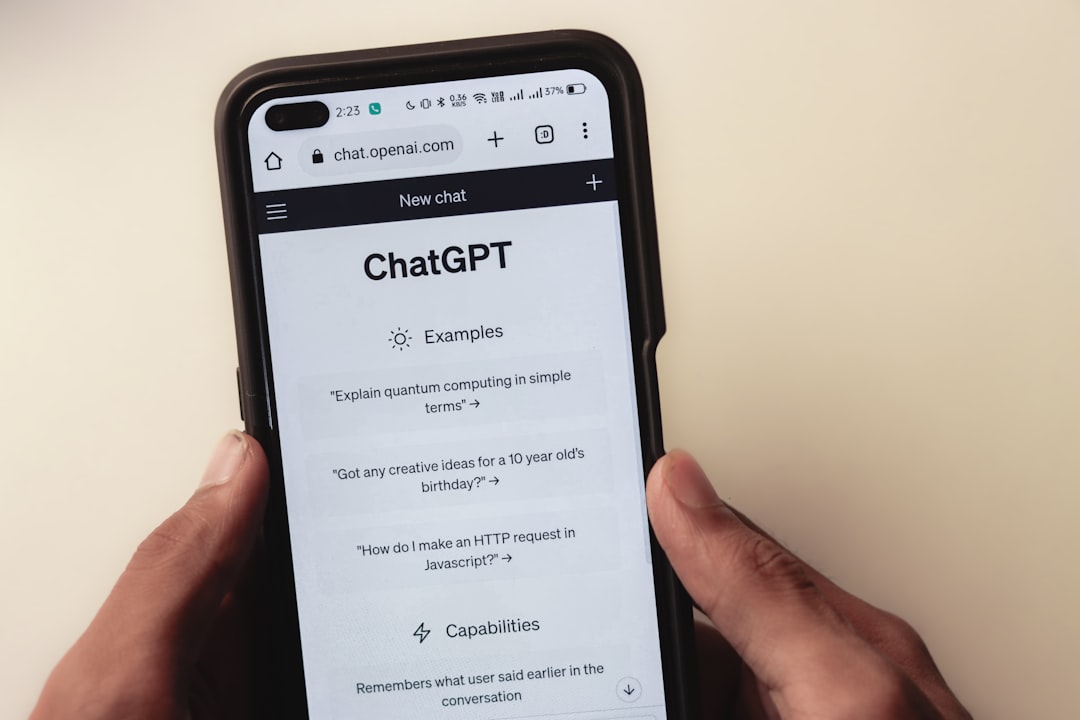
AI-powered businesses increasingly depend on chatbot applications to deliver faster support, smarter sales journeys, and more personalized customer experiences. As conversational AI becomes central to digital operations, choosing the right chatbot app development service can determine whether a company builds a simple automated responder or a scalable, intelligent business tool.
TLDR: The best chatbot app development services combine AI strategy, conversational design, software engineering, data integration, model training, and post-launch optimization. Businesses should look for providers that understand industry workflows, security requirements, omnichannel deployment, and measurable performance goals. A strong development partner creates chatbots that improve customer service, automate repetitive tasks, support sales, and integrate smoothly with existing systems.
Why AI-Powered Businesses Need Professional Chatbot App Development
Modern chatbot applications are no longer limited to answering basic questions. They can qualify leads, recommend products, schedule appointments, troubleshoot issues, process requests, collect feedback, and escalate complex cases to human teams. For AI-powered businesses, chatbots act as always-available digital assistants that help reduce operational costs while improving customer engagement.
Professional chatbot app development services help organizations move beyond generic templates. These services focus on building custom conversational experiences that reflect a company’s brand, processes, customer expectations, and technical ecosystem. A well-developed chatbot can connect to CRMs, e-commerce platforms, payment systems, help desks, analytics tools, and internal databases.
Businesses that rely on AI need solutions that are reliable, secure, and continuously improving. A chatbot must understand natural language, handle intent variations, remember context, and provide accurate responses. Development partners bring the technical expertise needed to design these systems correctly from the start.
Key Features of the Best Chatbot App Development Services
The best chatbot app development companies offer more than coding. They provide a complete development lifecycle that includes discovery, design, training, integration, testing, deployment, and optimization. The following features often separate high-quality providers from basic chatbot builders:
- Custom AI chatbot development: Services should create tailored chatbot applications based on business goals, user journeys, and operational requirements.
- Natural language processing: Advanced NLP enables the chatbot to understand user intent, detect sentiment, and respond in a human-like way.
- Omnichannel deployment: Strong providers build bots for websites, mobile apps, messaging platforms, social media, and internal enterprise systems.
- Third-party integrations: The chatbot should connect with tools such as CRM platforms, ERP systems, help desk software, payment gateways, and marketing automation platforms.
- Multilingual support: Global businesses benefit from chatbot apps that can communicate across different languages and regions.
- Analytics and reporting: Built-in dashboards help businesses measure user engagement, resolution rates, conversion rates, and common customer issues.
- Security and compliance: Providers must follow privacy best practices, secure data handling, access controls, and industry-specific compliance standards.
- Continuous training: AI chatbots require ongoing improvement using conversation logs, user behavior, and updated business knowledge.
Types of Chatbot App Development Services
Different businesses require different chatbot models. The best development services help organizations select the right type of chatbot based on complexity, use case, and budget.
1. Rule-Based Chatbot Development
Rule-based chatbots follow predefined scripts and decision trees. They are useful for simple workflows such as FAQs, appointment booking, basic troubleshooting, and guided product selection. While less flexible than AI-driven bots, they are cost-effective and reliable for structured interactions.
2. AI-Powered Chatbot Development
AI-powered chatbots use machine learning and natural language processing to interpret user messages and generate relevant responses. These bots are ideal for companies that need conversational flexibility, contextual understanding, and more advanced customer engagement.
3. Generative AI Chatbot Development
Generative AI chatbots use large language models to create natural, dynamic responses. When developed responsibly, they can support sales, customer service, employee training, onboarding, knowledge management, and research assistance. The best providers add guardrails, brand instructions, knowledge retrieval, and approval workflows to reduce inaccurate responses.
4. Voice Chatbot Development
Voice-enabled chatbots allow users to interact through spoken language. They are especially useful for call centers, healthcare services, banking, hospitality, and smart device experiences. Voice bots require speech recognition, speech synthesis, and careful conversational flow design.
5. Enterprise Chatbot Development
Enterprise chatbots are built for large-scale internal and external operations. They may support HR, IT help desks, procurement, employee onboarding, customer account management, and internal knowledge search. These systems require strong authentication, role-based access, data governance, and integration with enterprise applications.
What Makes a Chatbot Development Provider “Best”?
The best chatbot app development service is not always the largest or most expensive provider. It is the one that can align AI capabilities with business outcomes. Businesses should evaluate development partners according to strategy, technical ability, industry understanding, and long-term support.
A top provider begins with a detailed discovery phase. The team studies the company’s audience, communication style, support requests, sales process, data sources, and success metrics. This ensures the chatbot is designed around real user needs rather than assumptions.
Strong providers also invest in conversation design. A chatbot should not sound robotic, confusing, or overly formal unless that tone fits the brand. Conversation designers plan greetings, prompts, fallback responses, escalation paths, and user flows so the experience feels natural and helpful.
Technical quality is equally important. The provider should understand AI models, APIs, backend systems, cloud deployment, data pipelines, security architecture, and mobile or web app development. For AI-powered businesses, technical depth ensures the chatbot can scale as usage grows.

Industries That Benefit from Chatbot App Development
Chatbot applications create value across many industries. In e-commerce, they answer product questions, recommend items, recover abandoned carts, and support order tracking. In healthcare, they assist with appointment scheduling, symptom intake, patient reminders, and administrative inquiries.
In banking and fintech, chatbots help customers check account information, report issues, receive financial guidance, and complete secure service requests. In real estate, they qualify buyers, schedule viewings, answer property questions, and capture leads. In education, they support admissions, student services, course guidance, and learning assistance.
For SaaS and technology companies, chatbots can reduce support tickets, guide onboarding, answer documentation questions, and help users adopt product features. In travel and hospitality, they manage bookings, answer destination questions, provide itinerary updates, and offer personalized recommendations.
Benefits of Hiring Chatbot App Development Experts
Expert chatbot developers help businesses avoid common mistakes such as poor intent mapping, weak fallback handling, limited integrations, and inaccurate AI responses. Their experience can reduce development time while improving chatbot performance.
- Faster customer support: Chatbots can respond instantly to common questions and reduce wait times.
- Lower operational costs: Automation helps teams handle higher request volumes without increasing staff at the same rate.
- Improved lead generation: Bots can qualify prospects, collect contact details, and route leads to sales representatives.
- Personalized experiences: AI chatbots can use customer data to provide relevant recommendations and responses.
- 24/7 availability: Businesses can serve users across time zones without interruption.
- Better insights: Conversation analytics reveal customer needs, objections, and pain points.
- Scalable automation: A well-built chatbot can grow with the business and support new channels or features.
Important Technologies Used in Chatbot App Development
Leading chatbot development services use a combination of technologies depending on project requirements. These may include natural language processing engines, machine learning frameworks, large language models, cloud platforms, vector databases, speech recognition tools, and API integration layers.
For knowledge-based chatbots, many providers use retrieval-augmented generation. This approach allows the chatbot to search approved business documents, FAQs, manuals, or product databases before generating an answer. It helps improve accuracy and keeps responses aligned with company-approved information.
For mobile chatbot apps, developers may use native or cross-platform technologies to deliver smooth experiences on iOS and Android. For web-based chatbots, providers focus on responsive widgets, fast loading, accessibility, and seamless integration with website interfaces.
How Businesses Should Choose the Right Chatbot Development Service
Businesses should begin by defining the chatbot’s purpose. A customer support bot, sales assistant, internal HR bot, and healthcare triage bot all require different design decisions. Clear objectives help the development provider recommend the right architecture and features.
Decision-makers should review case studies, technical portfolios, client feedback, and industry experience. They should also ask about data privacy, AI model governance, hosting options, testing methods, maintenance plans, and ownership of source code.
A strong partner should be able to explain how the chatbot will handle sensitive information, errors, ambiguous user inputs, and escalation to human agents. The provider should also offer post-launch monitoring because chatbot performance improves through continuous analysis and refinement.

What the Development Process Usually Looks Like
A professional chatbot app development process typically begins with consultation and requirement analysis. The provider identifies business goals, target users, technical systems, and core conversation flows. Next, the team creates a chatbot strategy, including user journeys, integration plans, AI model selection, and success metrics.
During the design stage, conversation scripts and interface prototypes are developed. Then engineers build the backend, frontend, AI components, and integrations. The chatbot is tested for accuracy, usability, performance, security, and edge cases before launch.
After deployment, the service provider monitors conversations, reviews analytics, updates training data, and optimizes responses. This ongoing improvement is essential because customer behavior, company policies, product information, and market conditions change over time.
Cost Factors in Chatbot App Development
The cost of chatbot app development depends on scope, complexity, AI capabilities, integrations, supported platforms, design requirements, and maintenance needs. A simple FAQ chatbot may be relatively affordable, while a custom enterprise AI chatbot with multilingual support, secure integrations, and advanced analytics requires a larger investment.
Businesses should avoid choosing a provider based only on the lowest price. Poorly designed chatbots can frustrate customers, create inaccurate responses, and require expensive rebuilding later. A better approach is to evaluate expected return on investment, including reduced support costs, improved conversion rates, and better customer retention.
Future of Chatbot App Development for AI-Powered Businesses
The future of chatbot development is moving toward more intelligent, proactive, and context-aware systems. Chatbots will increasingly combine text, voice, images, user history, predictive analytics, and workflow automation. Instead of simply responding to questions, they will anticipate needs and complete tasks across multiple systems.
AI-powered businesses that invest in high-quality chatbot app development will be better positioned to deliver fast, personalized, and efficient experiences. As customer expectations continue to rise, intelligent conversational applications will become a competitive advantage rather than an optional feature.
Conclusion
The best chatbot app development services help businesses turn conversational AI into practical value. They combine strategy, design, engineering, integrations, analytics, and ongoing optimization to create chatbot applications that support real business goals. For AI-powered companies, the right development partner can build a secure, scalable, and intelligent assistant that improves customer service, increases efficiency, and strengthens digital growth.
FAQ
What is a chatbot app development service?
A chatbot app development service designs, builds, deploys, and maintains chatbot applications for websites, mobile apps, messaging platforms, and enterprise systems. These services may include AI development, conversation design, system integration, analytics, and ongoing optimization.
What makes an AI chatbot better than a rule-based chatbot?
An AI chatbot can understand natural language, identify user intent, manage context, and respond more flexibly. A rule-based chatbot is useful for simple scripted workflows, but an AI chatbot is better for complex conversations and personalized support.
How long does it take to develop a chatbot app?
Development time depends on complexity. A basic chatbot may take a few weeks, while a custom AI-powered chatbot with integrations, analytics, multilingual support, and security features may take several months.
Can chatbot apps integrate with existing business software?
Yes. Professional chatbot development services can integrate bots with CRM systems, help desk platforms, e-commerce stores, payment gateways, calendars, databases, and internal enterprise tools.
Are AI chatbots secure for business use?
AI chatbots can be secure when developed with proper encryption, access controls, data handling policies, compliance measures, and monitoring. Businesses should choose providers with strong security and privacy practices.
Do chatbots need ongoing maintenance?
Yes. Chatbots require continuous training, content updates, performance monitoring, bug fixes, and optimization. Ongoing maintenance helps improve accuracy and keeps the chatbot aligned with changing business needs.
Leave a Reply